


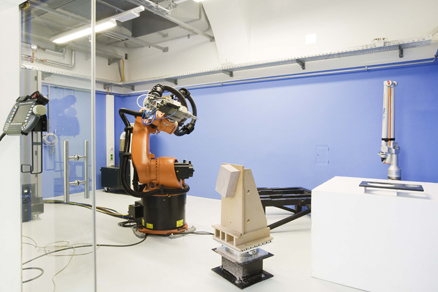
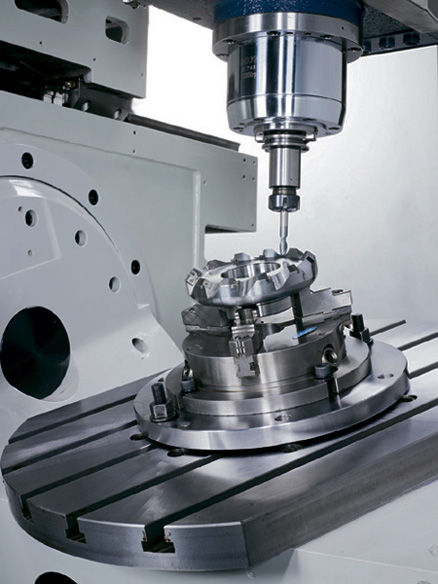
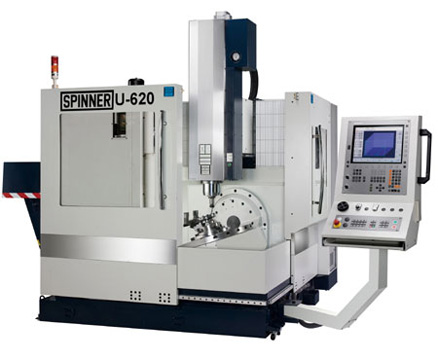

High-performance materials and computational software are inspiring complex geometries for many architectural challenges; architecture no longer accepts geometric constraints. These design approaches usually emerge in virtual computer models, but in order to assess their spatial and design quality, the designs must be translated into physical models. This process is very labour-intensive using traditional model-making techniques. At v2r_lab, research is conducted into how current industrial technologies can be made available to designers for the realisation of complex-shaped forms.
As part of research-led teaching, ‘file-to-factory’ processes are also demonstrated, thereby preparing students for an area of increasing importance in their professional practice.
The v2r_lab also engages with the wider community; in collaboration with artists, designers and architects, manufacturing processes are sought and developed within externally funded projects to realise ambitious projects. An interdisciplinary approach, drawing on resources from across the university, is a given.
 Location
Karlsplatz 13
Panigltrakt, Stair 7, EG
A–1040 Wien
Contact
elisabeth.kofler@tuwien.ac.at
+43 1 58801 264 28
Equipment
6+1 axis CNC milling robot
5 axis CNC metal milling machine
CNC Styrofoamcutter
Research Projects
PHANTOMAK
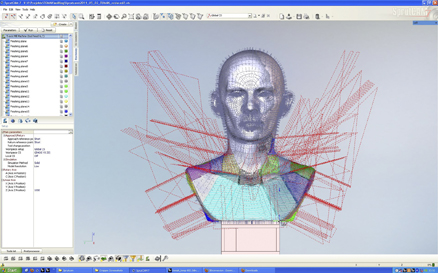
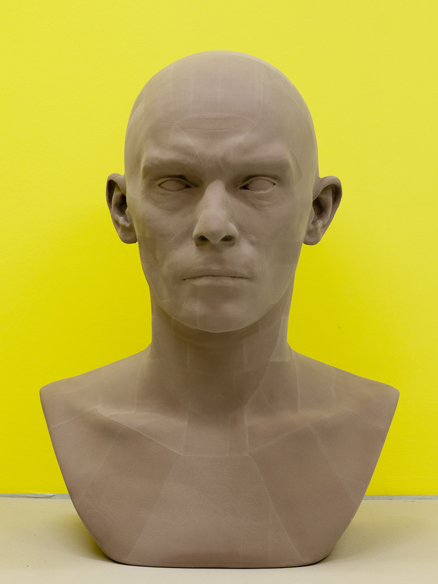
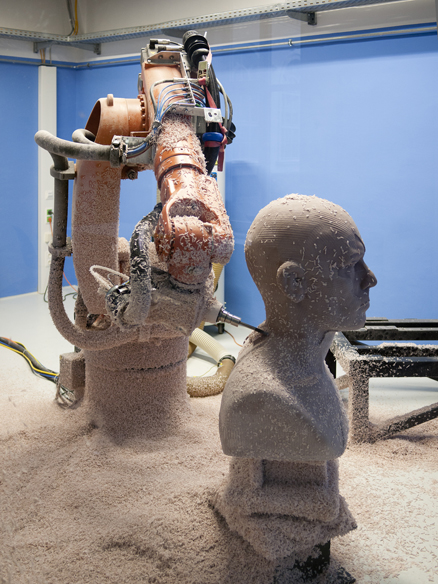
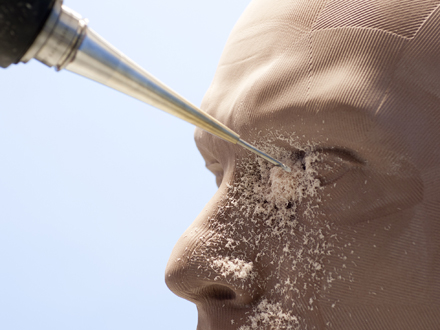
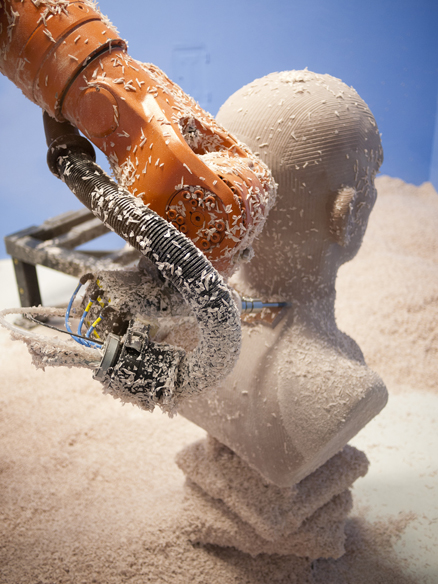
In collaboration between the artist TOMAK and TU Wien, several larger-than-life busts are being created using computer-controlled manufacturing processes as part of the research focus area ‘Integration of digital and physical design methods’.
The finished milled bust is the result of a multi-stage process involving a wide range of digital and physical machining techniques and tools. The fine details and irregularities of a human head are captured and reproduced with high precision. The next step involves manual finishing by the artist.
D-Strip Ship

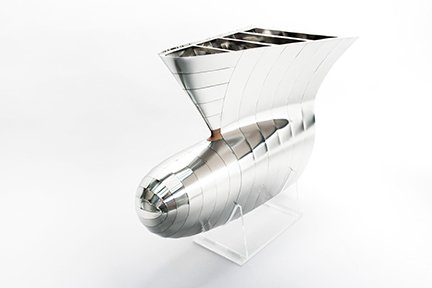
Complex geometries from unfoldable surfaces
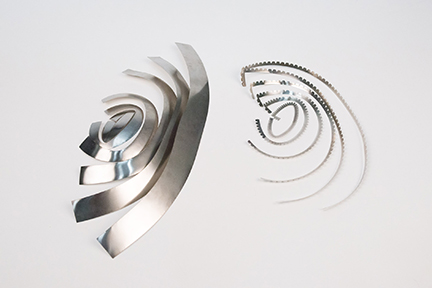
As part of the ARC research project on ‘Architectural Freeform Structures from Single Curved Panels’, a demonstration model of a ship’s bow was produced in the department’s workshops. Using a method developed by TU Wien, evolute and RFR-Ingenieurs, the originally spatially curved free-form surface of the ship’s hull was translated into developable sub-surfaces, allowing it to be manufactured from panels that are bent from flat sheets in a single direction.
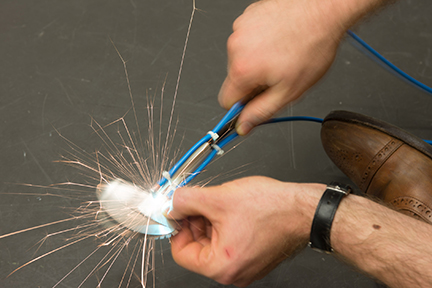
For this purpose, the model utilised laser-cut elements made from 0.1 and 0.2 mm thick stainless steel sheets, which form both the hull and the internal rib structure of the hull. The rigid connection of the model components is ensured by more than 3,000 hand-placed weld spots.
The model was produced using processes and tools that were specially developed and built for this purpose within the department.